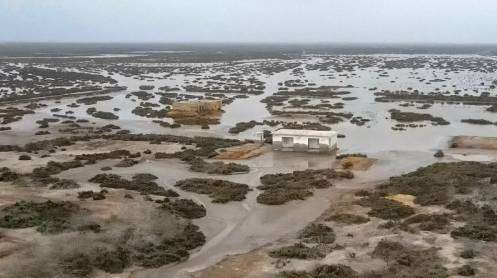
KARACHI: The rapid degradation of the Indus Delta is threatening coastal livelihoods and could increasingly expose Karachi to flooding, seawater intrusion and other climate-related risks, experts warned at a book launch ceremony held at the Arts Council of Pakistan.
Once a thriving ecosystem supporting fisheries, agriculture and thousands of coastal communities, the delta is steadily drying, eroding and sinking due to inadequate freshwater and sediment reaching its lower reaches. The worsening conditions are making parts of Thatta, Sujawal and Keti Bandar increasingly difficult to inhabit and forcing communities to abandon traditional livelihoods.
The concerns were raised during the launch of water expert Naseer Memon’s book, The Disappearing Delta: Ecological Devastation and Imperilled Livelihood in the Indus Delta.
Speaking at the event, Memon said extensive literature already existed on the Indus Delta, but he had written his book in English to make the issue accessible to younger generations and promote broader awareness of the ecological crisis.
He traced the deterioration of the delta to the development of irrigation infrastructure during the British era, saying the process could be linked to the construction of the Upper Bari Doab Canal in 1859. Subsequent construction of dams and canals further changed the river’s natural flow and distribution of water, contributing to the delta’s decline.
Memon strongly criticised the continued characterisation of water flowing into the sea as “wastage”, arguing that freshwater discharge was essential to maintaining the ecological balance of the river and delta. He said the delta’s requirement for freshwater should be recognised as a natural right rather than treated as unnecessary water loss.
He warned that environmental degradation was already producing serious social consequences in Thatta, Badin and Sujawal, where communities were facing what he described as “multidimensional poverty” as traditional sources of income and livelihoods became increasingly unsustainable.
The disappearance of mangrove forests, he added, was another major indicator of the delta’s deteriorating condition. The consequences, he warned, would eventually extend to Karachi, making the country’s largest city increasingly vulnerable to coastal flooding, seawater intrusion and climate-related hazards.
Journalist Shabina Faraz said the Indus Delta should not be treated solely as a Sindh-related issue, stressing that the Indus was a national ecological system connecting communities and ecosystems across Pakistan.
She said a healthy delta was vital to Pakistan’s economic and environmental well-being and urged people across the country to better understand its importance.
Environmentalist Afia Salam called for the Indus and its ecological significance to be incorporated more prominently into school and university education. She said younger generations needed to recognise the delta as a national asset rather than viewing its problems as an issue confined to a particular province.
Ehsan Laghari of the Indus River System Authority said the book highlighted both shortcomings and potential solutions that could be considered by the federal and Sindh governments. He stressed that restoring the delta would require coordinated action among all relevant stakeholders.
Writer Noorul Huda Shah linked the crisis to what she described as society’s weakening relationship with the land and the river. She said land was increasingly viewed only in terms of its economic utility, rather than as an ecosystem to which communities had a lasting connection.
She stressed that developing a deeper relationship with the Indus was essential to understanding and addressing the challenges confronting the river, its delta and the millions of people whose lives depend on them.
Story by Waqas Ali Ranjha